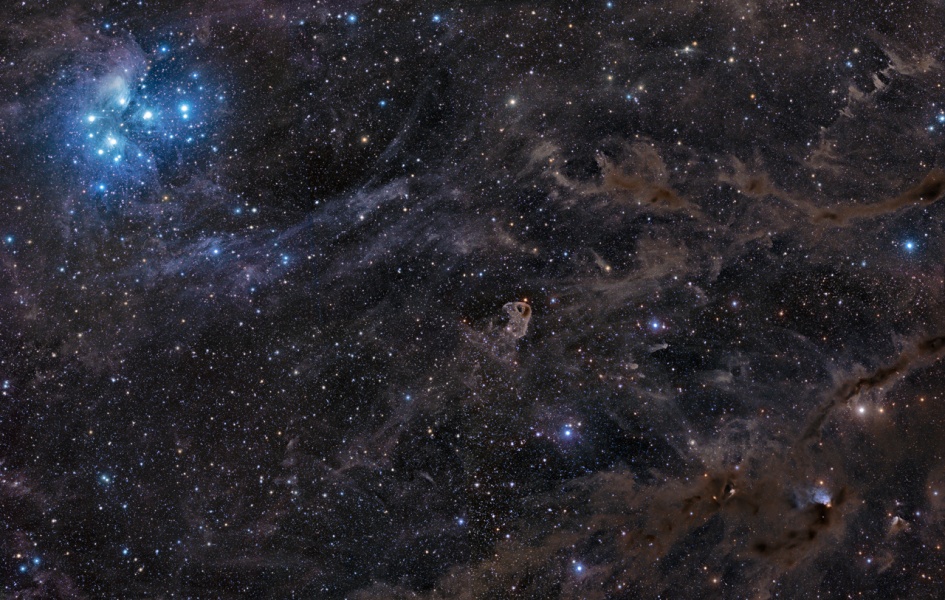
Picture from November 8, 2010
There is a lot going on in this large 10 degree-wide picture around the constellation of Taurus. The famous Pleiades star cluster can be seen in the upper left. It is known for it's reflection nebulae, which consist of dust particles that scatter the light, creating the bluish glow around the cluster. Also in the picture is less popular LBN 777, the nebula near the center that resembles the head of a bird. Another nebula, VdB 27, is visible in the lower right, along with nearby star RY Tau.
Friday, November 19, 2010
Friday, November 12, 2010
APOD 2.3
Picture from November 10, 2010
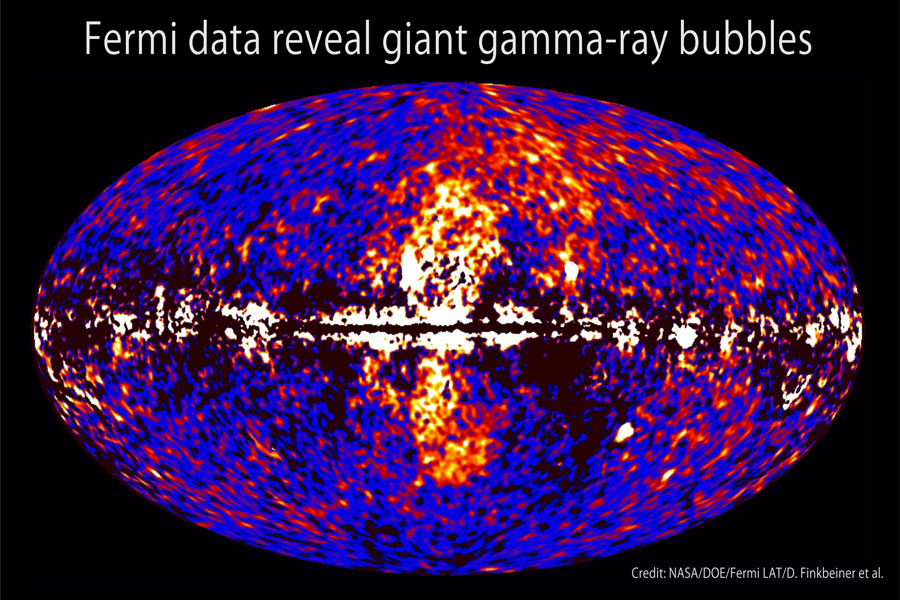
The Fermi satellite orbiting the Earth has, for the past two years, been gathering information on gamma ray emissions across the sky. The results, pictured here, are astounding. The Milky Way appears to have two large bubbles (the red and white splotches above and below the center of the image) protruding from its center emitting gamma rays outwards. The bubbles can also be seen to emit x-rays as well as microwaves. The bubbles span some 50,000 light years from top to bottom, a length that rivals the size of the galaxy itself. Little is known about these huge bubbles. How did they originate? What causes them? This reflects the fact that we still have much left to learn about the phenomena of our own galaxy.
Thursday, November 11, 2010
Great Worldwide Star Count
I reported that, at 27.2097 degrees latitude and -82.47616 degrees longitude on November 11 at 7:45 PM, the constellation of Cygnus was visible with a limiting magnitude of 3.
Friday, November 5, 2010
APOD 2.2
Picture from November 2, 2010
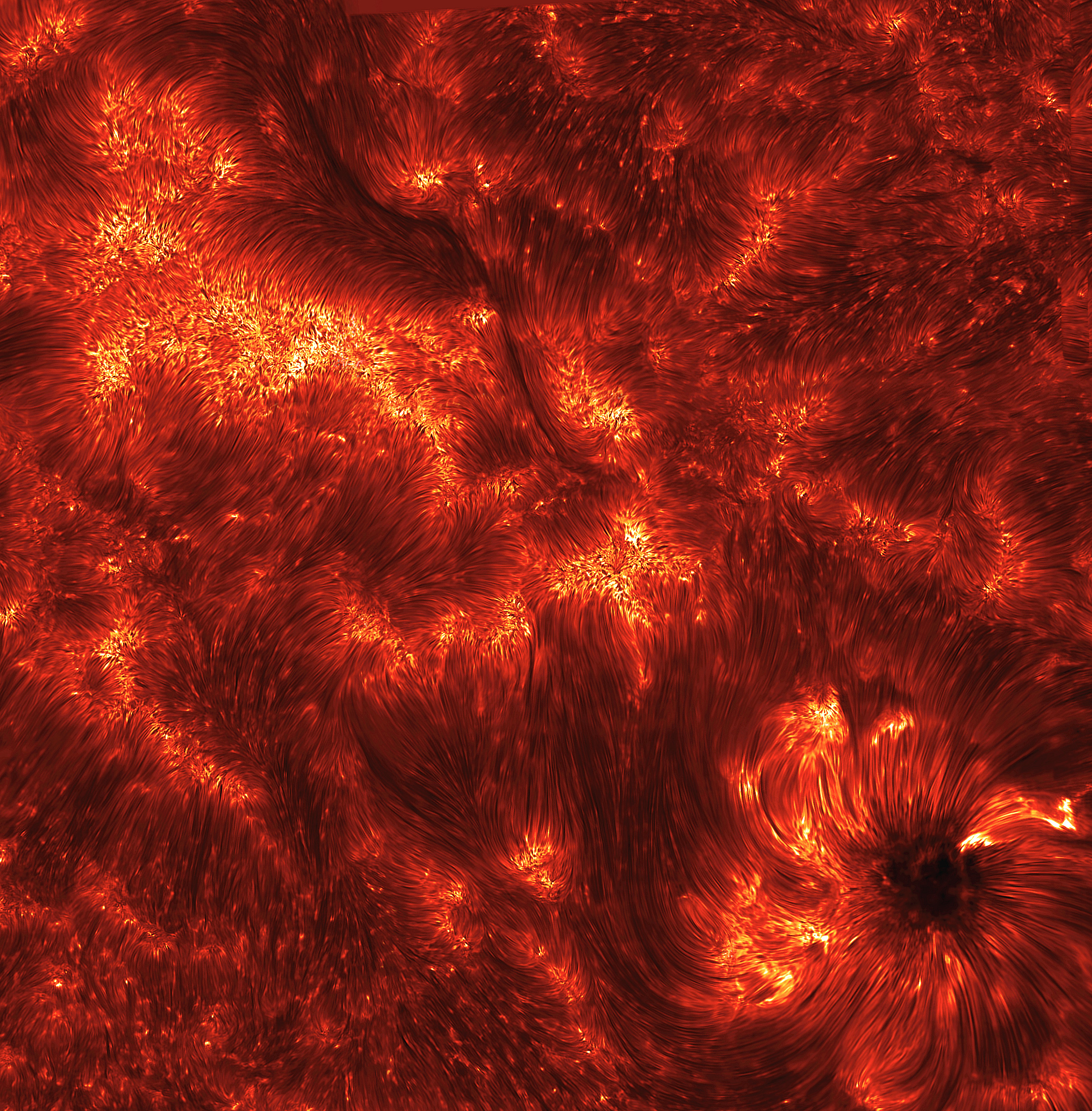
Solar flux tubes, or spicules, are big "pipes" of hot gas on the sun held in place by its magnetic field. An average size spicule is about as wide as an average state in the US and as long as the Earth's diameter. This picture, one of the highest resolution of it's kind to date, depicts such spicules converging at a sunspot in the bottom right. The lifespan of a spicule was found to be about 5 minutes, after which the gas falls back to the sun's surface. How exactly these spicules come about is still a mystery, but remains an active topic of research. The sun's importance to life on Earth is unquestionable, so it would behoove us to study the sun as much as possible.
Thursday, October 28, 2010
APOD 2.1
Picture from October 28, 2010
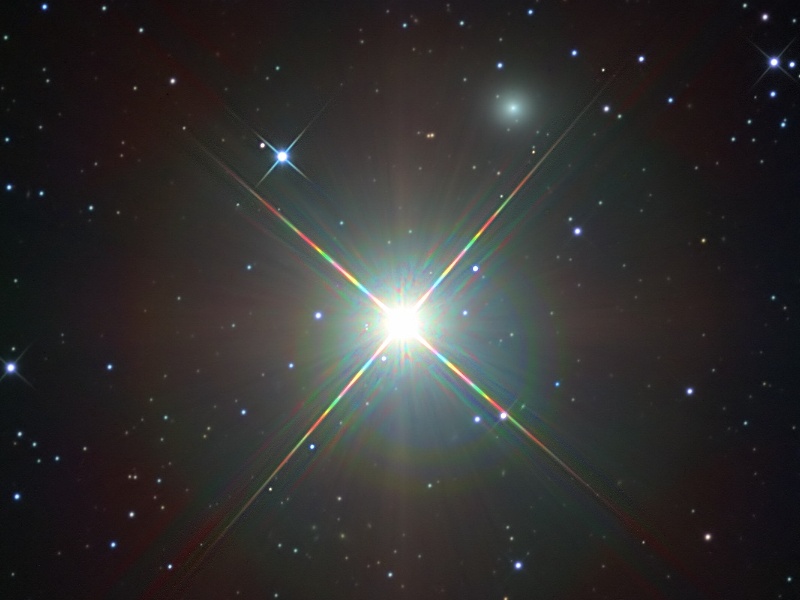
This APOD picture depicts a bright star known as Mirach. Mirach, the beta star in the constellation of Andromeda, is a red giant about 200 light years away. Another object of interest in the photo is a galaxy known as NGC 484, or Mirach's Ghost, which can be seen as the blurry spot to the upper right of the star. The galaxy, some 10 million light years distant, is given its ghostly moniker due to the fact that it often appears dim and fuzzy when seen through a telescope next to Mirach. This is because bright light causes certain aberrations, or distortions, to telescopic images. Such aberrations can be seen here in the form of the glare and the colorful lines (called "diffraction spikes") that seem to be erupting from the star.
Saturday, October 23, 2010
Observation: 10/23/10
This is the constellation of Lyra, as seen from outside the community center in my neighborhood at around 8:40 PM. The constellation was in the southern sky, about 70 degrees up. The brightest star in the photo is Vega, the alpha star of the constellation. The star to the upper right of that is Epsilon Lyrae, or "the Double Double." Only two of its components can be seen here though, as discerning all 4 stars would require a telescope. The star in the bottom left is Gamma Lyrae, and just to the right of that (although not visible here) would be M57, the Ring Nebula.
Friday, October 22, 2010
APOD 1.8
Picture from October 21, 2010
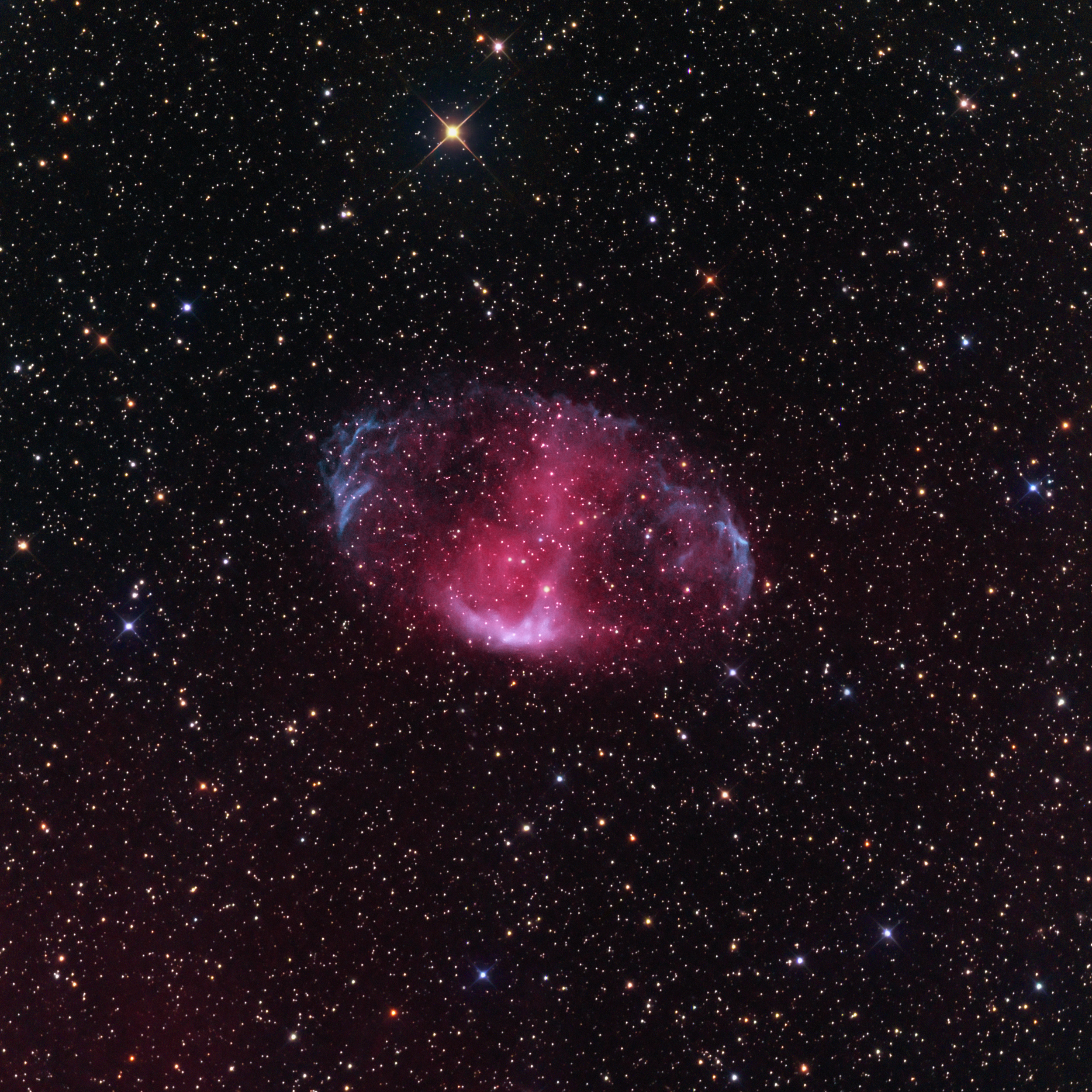
This is a picture of the planetary nebula MWP1, 4,500 light years away in the constellation of Cygnus. Planetary nebulae don't have anything to do with planets (the name comes from how they looked through telescopes back when they were first discovered in the 18th century). They are actually clouds of ionized gas expelled by dying red giant stars that are turning into white dwarfs. Typically, planetary nebulae only last from 10 to 20 thousand years. However, MWP1 is estimated to be some 150 thousand years old based on its rate of expansion.This makes MWP1 (and the star at its center) an intriguing object of study for astronomers.
Subscribe to:
Posts (Atom)